October 22 - 24, 2025, Cluj-Napoca, Romania
INNOCOMP 2025 Programme Download Book of Abstracts Download CfP
2025 Proceedings Volume 1 2025 Proceedings Volume 2 Research Projects Panel
We are pleased to invite you to the InnoComp 2025 — Innovative Perspectives on Computational Intelligence and Data Science, held from October 22 to 24, 2025, in Cluj-Napoca, Romania.


Tracks and Topics
- Computational Intelligence
- Metaheuristics
- Evolutionary Computation
- Swarm Intelligence
- Trustworthy, Explainable and Responsible Computational Intelligence
- Computer Vision
- Machine Learning and Deep Learning
- Machine Learning assisted Heuristics
- Trustworthy Machine Learning
- Natural Language Processing
- Fuzzy systems
- Generative Artificial Intelligence
- Data Science
- Knowledge Discovery and Data Mining
- Data Analysis and Pattern Recognition
- Big Data Analytics
- Data Modelling and Complex networks
- Knowledge Engineering and Management
- Intelligent Systems
- Advanced Control Strategies
- Robotics and Robots
- Intelligent Control and Manufacturing
- Bio-engineering and Bio-technologies
- Human Machine Interfaces
- Intelligent Engineering Systems
- Applications
- Combinatorial, Multi-Objective and Constrained Optimization
- Nature-inspired Computing in Dynamic and Uncertain Environments
- Computational Intelligence in Engineering
- Prediction and Estimation in Software Development, Processes, and Evolution
- Computational Intelligence for Energy, Transport and Environment Sustainability
- Computational Intelligence in Health and Medicine
- Computational Intelligence in Cybersecurity
- Computational Intelligence for Smart and Sustainable Cities
- Artificial Intelligence for IoT Applications
Invited Speakers
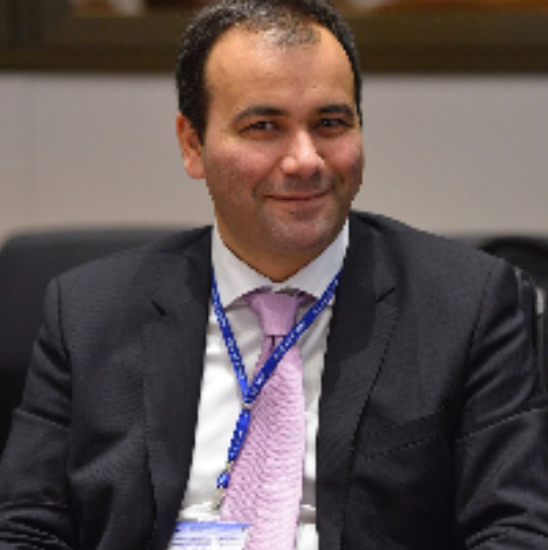
Aniello CASTIGLIONE - University of Salerno, Italy
Frontiers in the Quantum Computing Era
Abstract: A new era of computing is on the horizon, as quantum computation introduces opportunities in optimization, drug discovery, and secure communication, while posing challenges in cryptographic security, error correction, and system scalability. Meanwhile, as quantum computing advances, many widely used cryptographic schemes, such as RSA and elliptic curve cryptography, are expected to become vulnerable to quantum attacks, particularly through Shor's algorithm. To address this looming threat, post-quantum cryptography (PQC) has emerged as a field dedicated to designing cryptographic algorithms that can withstand both classical and quantum adversaries, ensuring long-term security in the quantum era. Practical applications of post-quantum cryptography (PQC) includes the protection of critical IoT devices, ensuring the integrity and authenticity of machine learning models, and enhancing resilience against ransomware attacks.
For IoT devices, adapting PQC algorithms to low-power and low-resource environments is essential. This adaptation involves developing lightweight cryptographic solutions that maintain security without compromising device performance. Furthermore, one of the major challenges in Federated Learning (FL) is the security risks arising from model exchanges between clients and the central server or among clients themselves. Thus, integrating PQC into Federated Learning (FL) workflows can safeguard model integrity by preventing unauthorized alterations and ensuring data authenticity of the decentralized knowledge discovery. Finally, the cryptographic schemes used by ransomware in their operations, such as data encryption, exfiltration, and Command & Control communication, are also potentially vulnerable to quantum attackers. All these examples create a pressing need to transition to cryptographic primitives that are resistant to quantum attacks, ensuring the long-term security of sensitive data and mitigating the risk posed by future quantum-enabled threats.
Bio: Prof. Aniello Castiglione is an Associate Professor in the Department of Management & Innovation Systems at the University of Salerno, Italy. He earned his PhD in Computer Science from the University of Salerno in 2007. His principal research areas include information forensics, digital forensics, security and privacy (especially in cloud and network environments), communication networks, applied cryptography, and sustainable computing. Dr. Castiglione has published broadly in international journals and conferences (~190+ papers) and has held multiple editorial and organizational roles for conferences and journals in his fields of expertise.
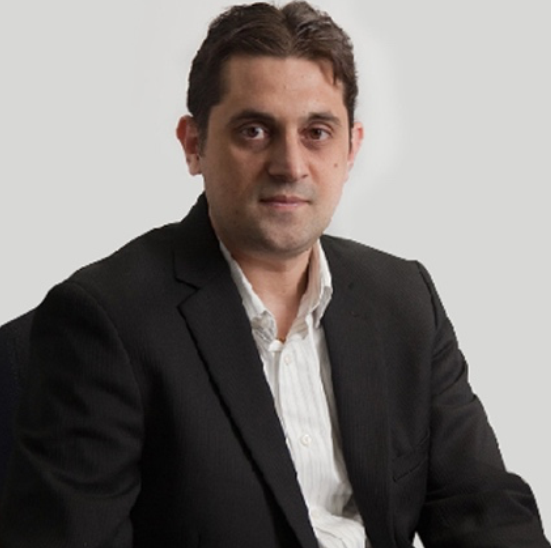
Andrei PĂUN - University of Bucharest, Romania
New research directions examples from ICIA: using AI in Biomedicine and other fields
Abstract: In this presentation, we highlight emerging and evolving research directions within the Institute for Computational Intelligence and Applications (ICIA) over the past year. These interdisciplinary efforts span a diverse array of application domains, including medicine, neuromorphic computing, bio-computing, and the detection of deep fakes. We will discuss both novel and ongoing initiatives that exemplify ICIA's commitment to advancing foundational theory while tackling pressing real-world challenges. Special attention will be given to how computational paradigms inspired by biology are shaping the future of intelligent systems, and how these innovations are being translated into impactful applications in healthcare and digital security.
Bio: Andrei Păun is professor of Computer Science at University of Bucharest and Director of the Research Institute for Artificial Intelligence "Mihai Drăgănescu" (ICIA) (since 2024). Andrei's education and research forming took place on two continents (Europe and North America) and in multidisciplinary research groups from four universities (University of Bucharest: Math and Computer Science, University of Western Ontario: Computer Science and Biology, Rovira y Virgili University: Computer Science and Linguistics, Louisiana Tech University: Computer Science and Biology). His main interests are AI, Biocomputing, Bioinformatics, as well as finite automata and other related areas. Andrei organised/co-organised conferences in automata theory, bioinformatics/Systems Biology both in North America and Europe, the most recent being CMSB 2022. Aside from the deep results in the interdisciplinary areas of Computer Science, Medicine and Biology known as Biocomputing, Bioinformatics and Systems Biology Dr. Paun showed a strong versatility to work with various research groups from many disciplines, especially Biology and Medicine.
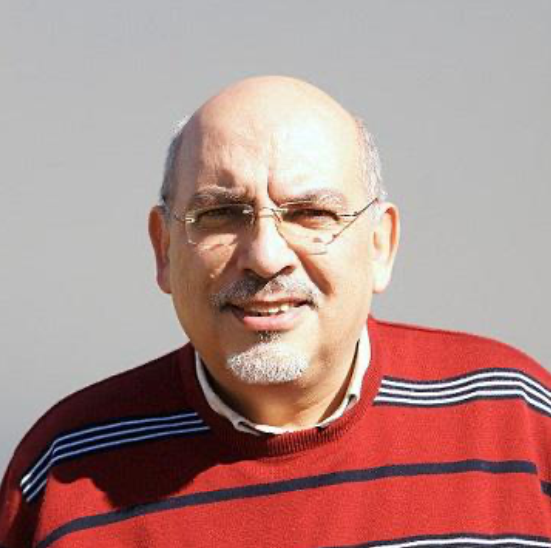
Jose Antonio BARATA De OLIVEIRA - Universidade NOVA de Lisboa, Portugal
Smart Manufacturing: Current Challenges on Using Computational Intelligence
Abstract: Smart Manufacturing represents the convergence of digital technologies, intelligent control, and adaptive systems engineering. While the fourth industrial revolution has provided unprecedented digital connectivity, the next frontier involves the integration of computational intelligence to enable autonomy, resilience, and self-organization. This presentation discusses the current challenges in embedding intelligence within complex manufacturing systems. It argues that Smart Manufacturing must be understood as a complex adaptive system, where emergent behaviors arise from interactions between distributed entities. The presentation further discusses how computational intelligence—ranging from biologically inspired algorithms to multi-agent architectures—can address adaptation, learning, and evolution in manufacturing ecosystems. Contributions of the author in the fields of holonic and agent-based control, self-organization, and biologicalisation of manufacturing are also presented as practical exemplars of this long road toward intelligent factories.
Bio: José António Barata de Oliveira is Full Professor in the Department of Electrical and Computing Engineering (DEEC) at NOVA School of Science and Technology (NOVA-FCT), Universidade NOVA de Lisboa, Portugal. He is a senior researcher at the Centre for Technology and Systems (CTS/UNINOVA), where he leads the research group RICS — Robotics and Industrial Complex Systems. His research interests include robotics, autonomous systems (e.g. UAVs, service robots), cyber-physical systems, intelligent manufacturing / Industry 4.0, perception and navigation, and applications such as smart agriculture. Professor Barata’s academic formation includes a PhD in Electrical and Computer Engineering from NOVA University of Lisbon (2004), a Master’s in Computer Science from the same institution (1995), and earlier degrees in Computer Science and Electrical Engineering / Digital Systems from NOVA and ISEL. He also holds the honorary title Doctor Honoris Causa awarded by the Technical University of Cluj-Napoca in 2023
Steering Committee
(alphabetical order)
- Camelia CHIRA - Babeș-Bolyai University, Cluj-Napoca, Romania
- Oliviu MATEI - Holisun SRL, Romania
- Florin POP - National University of Science and Technology POLITEHNICA Bucharest, Romania
- Petrica POP-SITAR - Technical University of Cluj-Napoca, Romania
Program Committee
(alphabetical order)
- Lenuța ALBOAIE - Alexandru Ioan Cuza University, Iași, Romania
- Apostolos AMPATZOGLOU - University of Macedonia, Greece
- Anca ANDREICA - Babeș-Bolyai University, Cluj-Napoca, Romania
- Costin BADICA - University of Craiova, Romania
- Ovidiu BAGDASAR - University of Derby, UK
- Constantin BALA ZAMFIRESCU - Lucian Blaga University of Sibiu, Romania
- Jose Antonio BARATA DE OLIVEIRA - Universidade NOVA de Lisboa, Portugal
- Ana BAZZAN - Federal University of Rio Grande do Sul, Brazil
- Ion BICA - Military Technical Academy, Romania
- Mihaela BREABAN - Alexandru Ioan Cuza University, Iași, Romania
- Alexandros CHATZIGEORGIOU - University of Macedonia, Greece
- Reggie DAVIDRAJUH - University of Stavanger, Norway
- Marc DEMANGE - Royal Melbourne Institute of Technology, Australia
- Liviu DINU - University of Bucharest, Romania
- Laura DIOSAN - Babeș-Bolyai University, Cluj-Napoca, Romania
- Ciprian DOBRE - National University of Science and Technology POLITEHNICA Bucharest, Romania
- Enol García GONZÁLEZ - University of Oviedo, Spain
- Dorian GORGAN - Technical University of Cluj-Napoca, Romania
- Alvaro HERRERO - University of Burgas, Spain
- Vasile MANTA - Technical University Gheorghe Asachi Iasi, Romania
- Daniel MICAN - Babeș-Bolyai University, Cluj-Napoca, Romania
- Mihai MICEA - Politechnic University, Timisoara, Romania
- Sanaz NIKGHADAM HOJJATI - Universidade NOVA de Lisboa, Portugal
- Constantin ORASAN - University of Surrey, UK
- Michele PAGANO - University of Pisa, Italy
- Vincenzo PALLOTTA - Applied Science University of Western Switzerland, Switzerland
- Andrei PAUN - University of Bucharest, Romania
- Dana PETCU - West University of Timișoara, Romania
- Radu Emil PRECUP - Politechnic University, Timisoara, Romania
- Hector QUINTIAN - University of A Coruna, Spain
- Dimitrios RAPTIS - Aalborg University, Denmark
- Günter RUDOLPH - TU Dortmund University, Germany
- Stefano SECCI - Conservatoire national des arts et métiers, France
- Gabriel SEMANIŠIN - Pavol Jozef Šafárik University in Košice, Slovakia
- Dragan SIMIĆ - University Novi Sad, Serbia
- Andrei SLEPTCHENKO - Khalifa University Abu Dhabi, UAE
- Ioannis SOROKOS - Fraunhofer IESE, Germany
- Giovanni STILO - University of L'Aquila, Italy
- Nikolai VELIKOV - Nikola Vaptsarov Naval Academy, Varna, Bulgary
- José Ramón VILLAR - University of Oviedo, Spain
- Michał WOŹNIAK - Wroclaw University of Science and Technology, Poland
- Daniela ZAHARIE - West University of Timișoara, Romania
Local Organizing Committee
- Camelia Chira - Babeș-Bolyai University, Romania
- Anca Andreica - Babeș-Bolyai University, Romania
- Laura Dioşan - Babeș-Bolyai University, Romania
- Simona Motogna - Babeș-Bolyai University, Romania
- Cristiana Moroz-Dubenco - Babeș-Bolyai University, Romania
- Mădălina Dicu - Babeș-Bolyai University, Romania
- Raluca Chiş - Babeș-Bolyai University, Romania
- Alexandru Manole - Babeș-Bolyai University, Romania
- Oskar Picus - Babeș-Bolyai University, Romania
- Ciprian Stupinean - Babeș-Bolyai University, Romania
- Rudolf Erdei - Technical University of Cluj-Napoca, Romania
- Daniela Delinschi - Technical University of Cluj-Napoca, Romania
- Laura Andreica -Technical University of Cluj-Napoca, Romania